Material on this web site copyright © 1995-2008, TelePost, Inc. All rights reserved.
Pricing and specifications subject to change without notice.


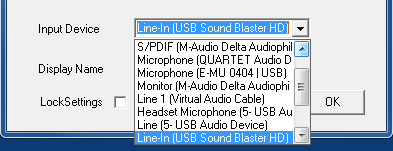
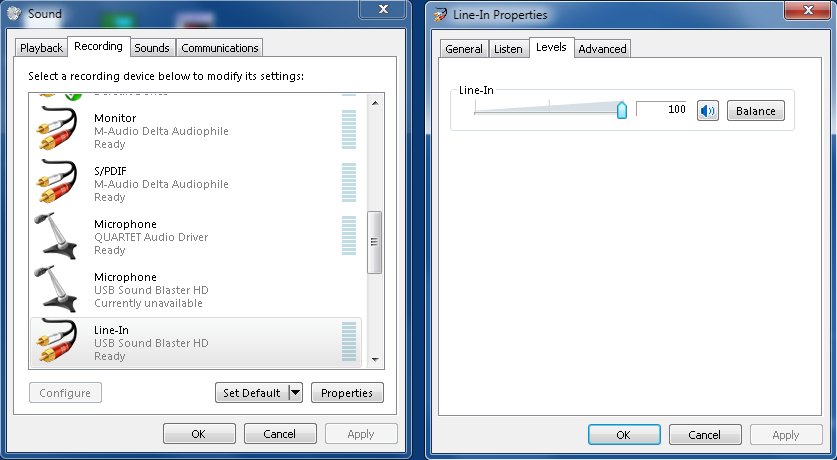
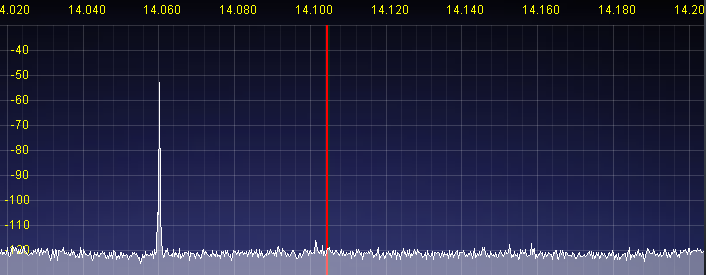
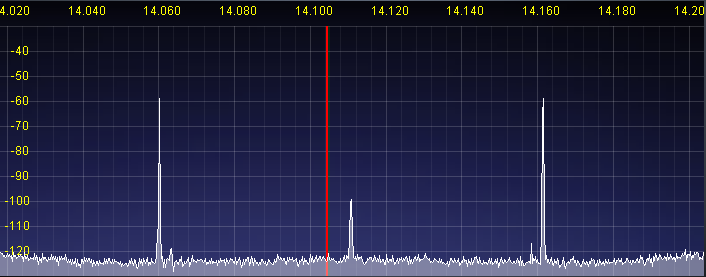
LP-PAN Sound Card Info

Summary:
Note: These cards were tested with Windows XP Pro. I believe they all provide Vista drivers as well, but not all provide drivers for older versions of Windows.

E-MU 0202 USB -
Pros: 192 kHz, inexpensive, easy installation, very good dynamic range, excellent image rejection, usable with laptop.
Cons: Uses more CPU power than the others, knobs can get bumped, ASIO driver can only feed one program, although MME driver can directly feed multiple programs simultaneously, noise floor is higher at frequency extremes, driver only for XP or Vista.
Recommendation: I would strongly suggest you have a dual core machine to handle this card.

E-MU 1212m PCI -
Pros: 192 kHz, fairly inexpensive, best
dynamic range, low CPU usage, can feed multiple apps easily, noise floor very flat to +/-90 kHz.
Cons: Requires two PCI slots, confusing driver setup, image rejection slightly lower than others due to lower input Z
.
Recommendation: Excellent choice for most uses. Please read the table and notes below regarding cable selection.

M-Audio Audiophile 2496 PCI -
Pros: Inexpensive, excellent
dynamic range, very low CPU usage, excellent image rejection, can feed multiple apps easily, flat noise floor.
Cons: 96kHz maximum sampling rate
.
Recommendation: Best bet for an older system, or if you want to run a lot of other applications. Except for the 90 kHz display width limitation, this is a great card.

Infrasonic Quartet PCI -
Pros: Fairly inexpensive, excellent
dynamic range, low CPU usage, very good image rejection, can feed multiple apps easily.
Cons:  N
oise floor is higher at frequency extremes, new card with limited availability.
Recommendation: Appears to be the best bet for 192 kHz if you have a single PCI slot. I am seeing a slight spur that appears to be due to interaction with other PCI cards in my system (I have three sound cards, a FW card and a video card installed).

M-Audio Firewire Audiophile -
Pros: Excellent
dynamic range, very low CPU usage, excellent image rejection, can feed multiple apps easily, usable with laptop.
Cons: 96kHz maximum sampling rate, no longer in production
.
Recommendation: Main limitation is availability. Shows up occasionally on eBay. Otherwise this is an excellent choice for a older laptop with a FW port.

SoundBlaster Audigy 2 ZS Notebook PCMCIA -
Pros: Excellent
dynamic range, very low CPU usage, excellent image rejection, can feed multiple apps easily, usable with laptop.
Cons: 96kHz maximum sampling rate, no longer in production, requires sample offset between channels, requires sample offset, has small spike at zero Hz
.
Recommendation: Main limitation is availability. Widely available on eBay, though, in the $50-100 range. Also, it has a ~15dB spike at the 0Hz crossover. This is buried in the noise on low bands, but visible on higher bands. It's not audible because LP-PAN uses a 6 kHz IF offset. Reasonable choice for an older laptop.

Sound card setup and configurations:

Infrasonic Quartet
E-MU 0202
M-Audio Audiophile 2496
E-MU 1212m


Detailed tests and discussion:

Here is a table of sound cards that have been tested by me with LP-PAN.  It is recommended that you read the table and all notes before deciding on a sound card. Note: I do not endorse these cards as being foolproof  to install in all systems. I just pass this information along to indicate that these cards tested well with my system, to the extent of the tests. Site specific issues like PC radiation, and radiation from PC internals in the case of PCI cards, can cause spurious blips in the display. Using high quality, shielded USB and serial cables is strongly recommended. Check the footnotes just after the table for applicable comments. Also, if you plan to use the board simultaneously with another application like CW Skimmer, read the section on sound card sharing.

Following this section is a discussion of sound card issues for those interested in reading it. The following measurements were made at 14 MHz, with the K3 ATTEN OFF and K3 PREAMP ON. The tests were done using a K3 with the N8LP buffer mod as detailed in the LP-100 Yahoo Group site in the Files section, http://groups.yahoo.com/group/LP-PAN/files. A stock K3 will have about 10dB higher noise floor, but otherwise be the same.

Audio cables used were Radio Shack part #42-2433 (1/8" mono to 1/4" mono) for EMU-0202,  Radio Shack part #42-2616 balanced 1/4" cables plus adapters for 1212m, FA-66 and Delta 44, and Radio Shack part # 15-3031 plus adapters for the M-Audio cards.

All of the following sound cards provide approximately the following performance in these categories...

THD: ~-70dB at -20dBm input
IP3: +20 to +22dBm (two tones, -15dBm, 5kHz spacing)
Single Tone Dynamic Range: 110 to 115dB (between noise floor and clipping)

The following are parameters which vary from card to card. I have assigned relative "grades" for some categories.


Noise Floor:
Display Center
Noise Floor:
Display Edges
Broadband
Image Rejection
CPU Usage
Note 2 
Application
Sharing
Cost
New
192 kHz


Creative Labs
E-MU 0202 USB
-130dBm
-126dBm
55 - 80dB C

$100
Roland Edirol
FA-66 Firewire*
-129dBm
Note 3
45 - 70dB B
B
$280
Creative Labs (Note 4)
E-MU 1212m PCI
-138dBm
-138dBm
45 - 60dB
B
A
$140
Infrasonic Quartet PCI
-133dBm
-125dBm
50 - 70dB B
A
$140
96 kHz


M-Audio Firewire
Audiophile
-131dBm
-131dBm
55 - 75dB
A A $80
Used
M-Audio
Delta44 PCI *
-129dBm -129dBm 50 - 70dB
A A $150
M-Audio
Audiophile 2496 PCI
-131dBm -131dBm
55 - 70dB A A $90
SoundBlaster Audigy 2 ZS
Notebook PCMCIA (Note 8)
-129dBm -129dBm
55 - 70dB A ? $50-100
Used

* Card has a spurious response at 0Hz whether LP-PAN is connected or not. The level is 5-10dB above the noise floor, and will not be noticeable on most bands when connected to an antenna. LP-PANs after serial #208 use a 6kHz offset for the local oscillator to move this type of response outside the audio passband, improving usability with older sound cards. The offset xtal can be ordered as a replacement for earlier LP-PANs.

1)  Displayed level accuracy when fed with K3 / LP-PAN with K3 preamp and attenuator OFF and LP-PAN set to nominal gain. Delta44 accuracy is shown with two hardware settings from the Delta44 control panel (consumer,  -10dBV).

2) Dell WS360, 2.8GHz P4, 1.5GB. Software running is PowerSDR-IF Stage, LP-Bridge and Firefox. Adding CW Skimmer  increases this number by 30%, and turning on the PowerSDR sub-receiver adds another 10%. Adding a couple other programs like a logger and PSK program can add an additional 10%. My system, with all that running is not able to keep up using the E-MU 0202 USB card, but is fine with the other cards.
3) Card has a peak in noise floor of about 10dB at +/- 75 kHz, with a rolloff of about 15 dB in noise and gain at +/- 96 kHz. This is probably due to the anti-aliasing filter design. That makes the FA-66 useful up to about 150 kHz display bandwidth. Also, note the peak in noise near 0Hz in the SpectraPlus screen capture at the botom of this page. Also, even though this card is supported in PowerSDR, I found it preferable to set the program to "Unsupported Sound Card" and use the manual controls on the card.

4)
The card requires two slots in your PC. The 1616m uses the same 1010 processor card, but instead of the PCI I/O card, it uses a "MicroDock" external I/O chassis. It also costs significantly more money. I suspect that the 1616m will have better broadband image rejection, but haven't tested this. These cards require the PatchMix mixer program from Creative, which is a very flexible, but confusing program if you are not familiar with professional mixing consoles. I have posted a PatchMix config file for the 1212m on the LP-PAN User's Group site, at  http://groups.yahoo.com/group/LP-PAN/files/ The posted 192 kHz session sets up an input strip to feed LP-PAN to Bus 1, a Send to route Bus 1 to the ASIO input of PowerSDR, a Send to route Bus 1 to the WAV input of CW Skimmer, and a strip to route the ASIO output of PowerSDR to the output jack on the 1212m. NOTE: You must use the latest driver and PatchMix mixer versions for proper operation of this configuration. Older drivers / firmware, like the ones on the CD supplied with the card,  require a different configuration which will not work with CW Skimmer.

5) These cards have a noise floor which rises slightly at the display extremes. The noise at the edges is about 5dB higher than at the center value indicated in the chart.

6) This range represents the highest and lowest measured image rejection over the entire display width. The lower value is typically the value at the left and right edges of the display. The image strength also increases as the image and fundamental converge at the center, of course.

7) Measured with balanced cables.
The 1212m is finicky in regards to cabling because it has a much lower input Z than the other cards, and the input Z varies more with frequency. This manifests itself as reduced image rejection at the display extremes. The 1212m appears to have better image rejection with balanced cabling because the load Z is doubled in that case.

8) This card has a slight 0Hz spike about 15dB above the noise floor. Buried in the noise on the lower bands, visible on the higher bands, but not audible since it's outside the passband (LP-PAN uses a 6 kHz IF offset). Requires a sample offset between channels.


Sound card sharing update:

Most of the drivers for the PCI cards will let you share the card between multiple applications. I have tested this most of the recommended cards.  I have not found a way to share the E-MU 0202 USB card with PowerSDR and CW Skimmer using the ASIO driver. It is possible to share the card, though, by selecting MME as the driver in both applications.  You will need to go into "Expert" mode on the PowerSDR audio setup tab, and set a latency of about 25ms due to the added latency of MME.

General Sound Card Info:

There are several important factors that need to be heeded when selecting a sound card for use with LP-PAN.

Bandwidth... the sampling rate AND bandwidth of the card need to match your desired displayed bandwidth. For a displayed width of ~180 kHz, you need a board with 192 kHz sampling for BOTH "record" and "playback". Most 192 kHz cards are limited to 96 kHz in record. A card with 192 kHz sampling rate will generally provide a bandwidth of about 90 kHz. This is determined by the Nyquist limit, plus the response of the anti-aliasing filters. Since both I & Q (in-phase and quadrature) signals are being sampled, the displayed bandwidth is double the actual sound card bandwidth. Bandwidth is also limited by wideband noise. Some 192 kHz cards exhibit rising noise between about 45 kHz and 90 kHz, with a noise floor at 90 kHz that might be 25 dB higher than at low frequencies. Manufacturers don't specify these things, so only testing can determine which cards are usable.

Resolution... The dynamic range and noise floor of the sound card are largely determined by resolution, or bit depth. Dynamic range is the ratio in dB of the maximum signal that can be handled to the noise floor. Inexpensive cards tend to use 16-bit  resolution, which is adequate for a simple spectrum display that is not concerned about maximum dynamic range or noise floor. 24-bit cards are preferred, as they should provide 100dB or more dynamic range.

Interface Type... There are several types of sound card interfaces. PCI, USB, Firewire and PCMCIA. PCI cards plug into a desktop PC, while the others can work with any PC, including laptops, if they have the correct port. It doesn't matter which you use, but I have found that systems with slower processors will work better if you avoid USB interfaces. USB is not a particularly efficient interface, and uses a lot of processor calls and interrupts, which eats up CPU cycles. PCI and Firewire are especially efficient interfaces.

Connections... LP-PAN will work with almost any analog sound card connections, either balanced or unbalanced. You may have to use some commonly available adapters or adapter cables to connect to LP-PAN. If the card only has AES-EBU or SPDIF digital ports, it will not work with LP-PAN. Analog inputs and outputs are required.

Channels... LP-PAN requires 2 channels... one for I and one for Q. Having more channels is OK, and if you use your sound card for other things like a software defined radio with both transmit and receive capability, you will find it necessary to have 4 channels. Beware of internal laptop sound cards which sometimes only provide a mono microphone or line input. These will not work with LP-PAN unless you can live with zero image rejection.

Cost... Sound cards range in price from <$50 to as much as $500. It should be possible to find a very good card for use with 96 kHz or 192 kHz sampling rates in the range of $80 to $150 new, and even less on eBay.


Cards "supported" in PowerSDR

These cards are supported in PowerSDR, but that doesn't automatically mean they will work with LP-PAN. All of the recommended cards above are actually "unsupported" in PowerSDR, but work great. The biggest issue has to do with spurious signals near 0Hz output on the sound cards. With IQ decoding, any imbalance between channels, or other spurious outputs near 0 Hz, will create an audible tone and blip on the display at the center if the offsets are adjusted to zero beat the K3 audio output. If you only plan to use the PowerSDR display, and not the demodulating capabilities, then this is not too important. Also, while some cards have this problem, the levels are low enough to be buried in QRN when an antenna is connected. See the above sound card chart for details.

M-Audio Delta 44 (PCI)
Presonus FireBox (Firewire)
Edirol FA66 (Firewire)
SB Audigy, Audigy 2, Audigy 2ZS (PCI)
SoundBlaster Extigy, MP3+ (USB)
Turtle Beach Santa Cruz (PCI)


Improving Sound Card Performance
Note: Do not attempt these suggestions unless you have some familiarity with computers, as some of the recommended tricks alter basic Windows operation. All tricks are reversible if you don't like the results, I believe.

Here is a link to Dave, W8FGU's paper on tuning a Vista system for best sound card performance. It also applies in many cases to XP. Vista Tuning for LP-PAN.pdf

Here is an interesting link I found that can also help tune your system for maximum sound card performance. I haven't tried all these things, and some are similar to what Dave covers in his paper above. YMMV.  http://www.cgoff.fsnet.co.uk/popsclicks/